
Regular Inspection in Accordance with DGUV – for Maximum Safety
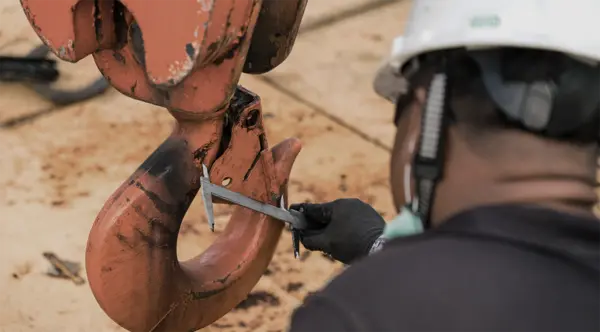
To ensure reliable and safe operation, the DGUV requires lifting accessories to be inspected annually. These inspections help identify potential damage or wear at an early stage and prevent safety-critical situations. Our qualified service technicians carry out professional inspections and documentation, ensuring that your equipment always complies with legal requirements and allowing you to rely on safe and dependable operation at all times.
Do you need advice on your DGUV inspection?
Book your personal consultation with our expert now.
We offer the following DGUV inspections:
Lifting Accessories (Magnetic Crack Detection Testing)
- Inspected in accordance with DGUV Rule 109-017 – Lifting Accessories and Load Handling Attachments
- Inspected in accordance with DGUV Regulation 17 – Event Technology
Steel Wire Ropes
- Inspected in accordance with DIN ISO 4309
Hoisting Equipment
- Inspected in accordance with DGUV Regulation 54 – Winches, Lifting and Pulling Devices
- Inspected in accordance with DGUV Regulation 17 – Event Technology
Cranes
- Cranes Inspected in accordance with DGUV Regulation 52
Personal Protective Equipment (PPE)
- Inspected in accordance with DGUV Rule 112-198 – Personal Protective Equipment Against Falls from a Height
- Inspected in accordance with DGUV Rule 112-199 – Personal Protective Equipment for Rescue Operations
Ladders & Step Stools
Inspected in accordance with DGUV Information 208-016 – Ladders and Step Stools Racking and Shelving Systems Inspected in accordance with DGUV Rule 108-007 – Racking and Shelving Systems
Our inspection options - Flexible & Reliable
Choose between our fast-track inspection service at our facilty or on-site inspections at your premises
 Fast-Track inspection
Location Düsseldorf
Ideal for a large number of inspection items
Cost-effective and consolidated inspections
Repairs and replacements available directly on site
 On-Site Inspection
Performed directly at your facility
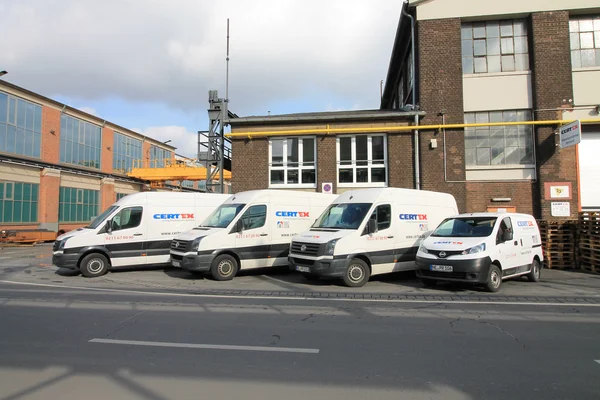
Service vehicles operating nationwide
On-site inspection including inspection report and inspection label
Spare parts available immediately

Break Testing & Load Testing
Safety and quality are of paramount importance when it comes to lifting accessories. With our in-house test bench located directly in our production facility, we test lifting chains, shackles, wire ropes, and other components under real load conditions – reliably, fully documented, and in accordance with the highest standards.
Break Testing
During a break test, a component is deliberately subjected to loads beyond its maximum rated capacity. The objective is to determine the force at which the product fails or becomes damaged. These tests provide valuable insights into material behavior, safety margins, and overall product quality.
Load Testing
Load testing is carried out to verify that a product can safely withstand its specified Working Load Limit (WLL) without permanent deformation or damage. This ensures that lifting accessories consistently meet the demands of everyday operational use.
Testing with Third-Party Certification
Upon request, we conduct tests under the supervision of recognized inspection and certification bodies such as DNV, Lloyd’s Register, or comparable organizations. Independent inspectors oversee the testing process and document both the proper execution of the test and its results.
In-House Test Bench
Thanks to our own test bench, inspections and testing can be performed flexibly, efficiently, and directly on-site within our production facility. This enables short response times, complete traceability, and the highest level of quality control – from individual component testing to full production batch approvals. Our test bench is capable of applying loads of up to 500 kN (50 tonnes).
MT-Prüfung - Magnetpulververfahren in der Hebetechnik
Wir bieten die gesetzlich vorgeschriebene zerstörungsfreie Prüfung auf Rissfreiheit an. Dabei werden im MT-Magnetpulververfahren Oberflächenrisse durch Magnetisierung von Eisenpulver sichtbar gemacht – eine zuverlässige Methode, um sicherheitsrelevante Schwachstellen zu erkennen, die mit bloßem Auge oft verborgen bleiben.

CertMax+ is our online database from CERTEX for managing products and equipment that are subject to regular inspection and monitoring, such as slings, shackles and other lifting equipment.
CertMax+ supports the identification of your slings using RFID (Radio Frequency Identification). Identification using a barcode or a manually assigned part number is also possible. In addition, you can access CertMax+ with any browser, iPad, iPhone or Android smartphone - 24 hours a day, 7 days a week.
CertMax+ provides you with information on the status of your equipment - operational or non-operational. CertMax+ gives you access to the relevant reports and certificates for your equipment. Everything is available around the clock.
You can access the CertMax+ login portal here. If you have any questions, you can download our instructions directly

FAQ Prüfungen
CERTEX bietet DGUV-Prüfungen für Anschlagmittel, Drahtseile, Lastaufnahmemittel, Hebezeuge, PSA, Regale sowie Krane an.
| Prinzipiell werden unsere Kunden natürlich frühzeitig eingeplant wodurch kurzfristige Einsätze nicht immer möglich sind. Wir bitten Sie daher sich so früh wie möglich um einen Termin zu kümmern. In beiden Fällen sprechen Sie uns gerne an. Ihren Termin können Sie direkt hier mit uns vereinbaren |
Ja, nach Terminabsprache können Sie Ihre Anschlagmittel auch zu uns einschicken.
Laut DGUV müssen Anschlagmittel mindestens jährlich geprüft werden. Anschlagketten müssen zudem alle drei Jahre einer zestörungsfreien Rissprüfung unterzogen werden.
Ja, alle geprüften Teile werden in unsere digitale Datenbank Certmax+ dokumentiert. Dort können Sie sich die Prüfzertifikate 24/7 anschauen oder herunterladen.
Die Vorschriften zur Prüfung von Anschlag- und Lastaufnahmemitteln wurde im laufe der Zeit überarbeitet und immer wieder in neue Regelwerke überführt. Vor der aktuellen DGUV Regel 109-017 wurde diese unter anderem in der DGUV 100-500 oder der UVV BGR 500 behandelt.


